I was looking into some trends associated to Project portfolio management and brought it all together into this list. As it is VERY LARGE list, I am splitting into 2 posts. Here is the Part I:
In the rapidly evolving corporate landscape, effective project portfolio management (PPM) is no longer just a best practice—it’s a strategic imperative. As we look towards 2025, several key trends are emerging that will redefine how businesses approach PPM, demanding a more adaptive, integrated, and technologically advanced approach.
From embracing hybrid methodologies to leveraging the power of artificial intelligence, these trends highlight the critical shifts necessary for PMOs, Innovation and IT departments, and leadership teams to navigate complex challenges and drive sustained success. Understanding and adopting these trends will be crucial for maintaining competitiveness, fostering innovation, and achieving strategic goals in an increasingly dynamic global market.
1. Hybrid Management Approach: Blending Agility with Traditional Rigor
The notion that a single project management methodology can universally address all organizational needs is becoming increasingly obsolete. In 2025, the corporate world is firmly embracing a hybrid management approach, recognizing that successful project delivery often requires a blend of traditional and agile methodologies. This trend acknowledges that different projects, or even different phases within a single project, may benefit from varying levels of flexibility, control, and iterative development.
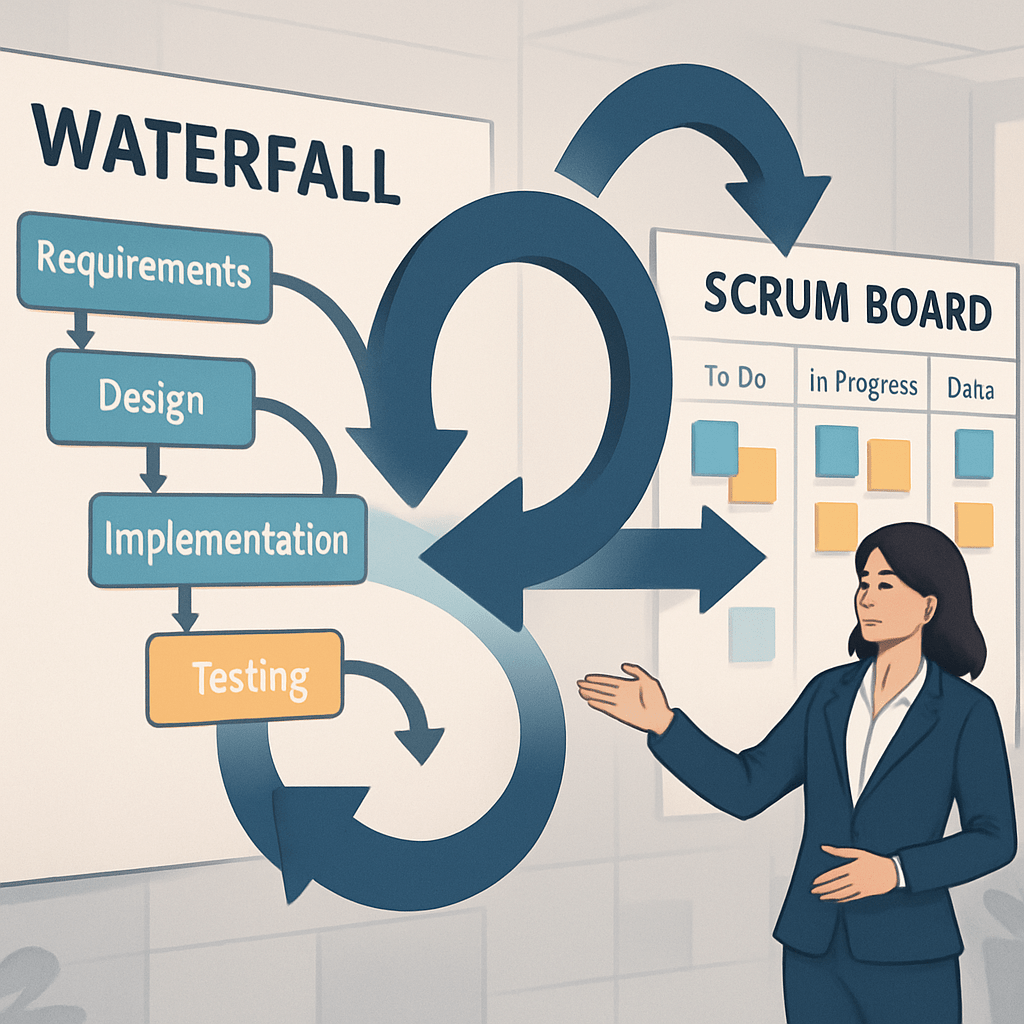
1. Hybrid Management Approach: Combination of agility with Traditional steps. The notion that a single project management methodology can universally address all organizational needs is becoming increasingly obsolete. In 2025, the corporate world is firmly embracing a hybrid management approach, recognizing that successful project delivery often requires a blend of traditional and agile methodologies. This trend acknowledges that different projects, or even different phases within a single project, may benefit from varying levels of flexibility, control, and iterative development.
Organizations are realizing that market competitiveness hinges on their ability to adapt swiftly to a constantly changing environment. This necessitates adopting management models that cherry-pick the most effective elements from both traditional (e.g., Waterfall) and agile (e.g., Scrum, Kanban) frameworks. For instance, while a traditional approach might be suitable for projects with well-defined scopes and predictable outcomes, agile methodologies excel in environments characterized by uncertainty, rapid feedback loops, and evolving requirements.
The beauty of the hybrid approach lies in its adaptability. It allows PMOs and project managers to customise their strategies to the specific demands of each project, ensuring optimal resource allocation, risk management, and value delivery. This flexibility not only enhances project success rates but also fosters a culture of continuous improvement and responsiveness within the organization. The key is to understand when and where to apply each methodology, creating a synergistic blend that maximizes efficiency and effectiveness.
2. Integrate PPM with Corporate Strategy:
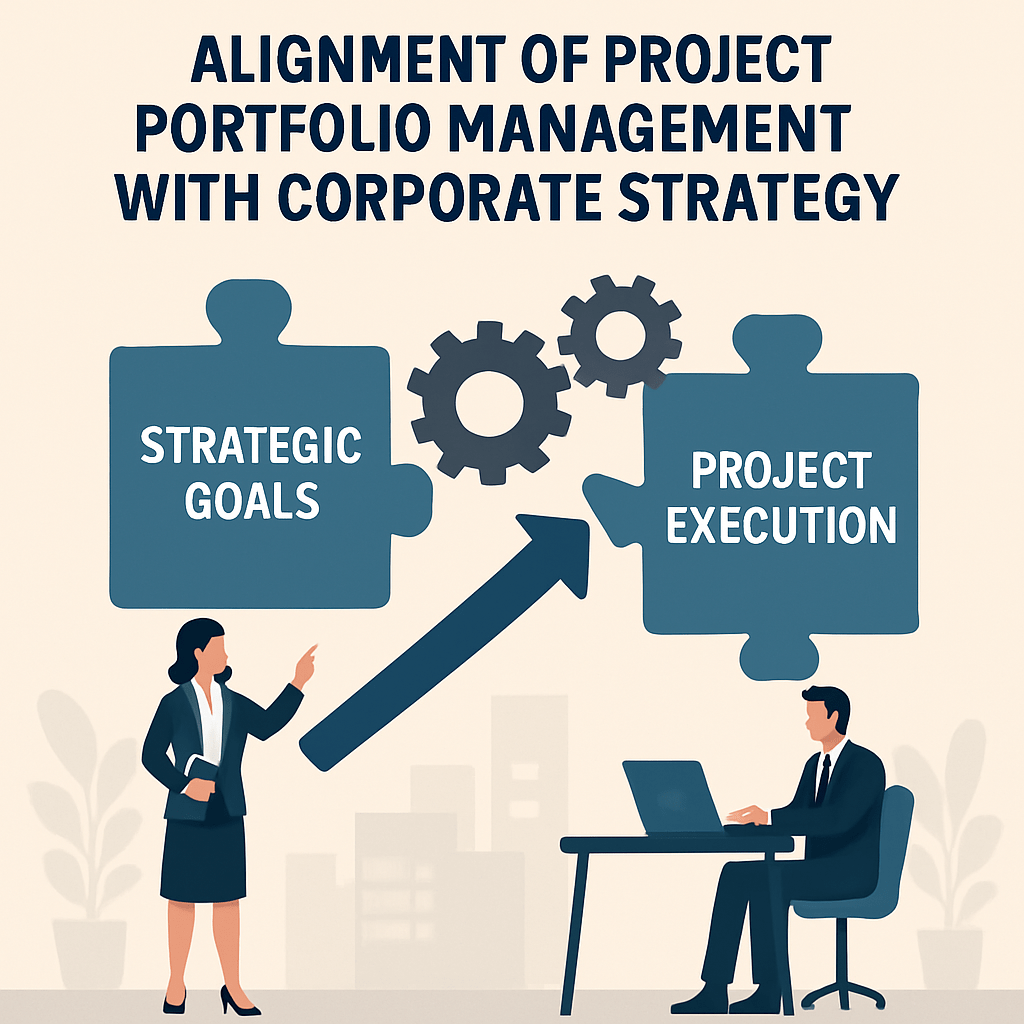
In today’s competitive landscape, simply completing projects on time and within budget is no longer the sole measure of success. This means that every project and program undertaken by an organization must be meticulously aligned with its strategic objectives, ensuring that all efforts contribute directly to the company’s long-term vision and goals.
This integration goes beyond mere project scoring and extends to a holistic approach where processes related to Resource Management, Demand Management, and Financial Management are all aligned with strategic planning. PMOs play a pivotal role in this trend, acting as strategic partners who facilitate the effective communication of the corporate strategy and involve teams in the prioritization process of projects and initiatives. This ensures that resources are allocated to projects that offer the highest strategic value and potential return on investment.
The market is witnessing a proliferation of PPM tools equipped with sophisticated Strategic Portfolio Management capabilities. In this article you can see many systems in a. list: LINK
But the one that I am a big fan of I share here: ITONICS – They have a nice setup from Trends, strategic areas, portfolio, projects and teams.
3. Adaptive Portfolio Management: The toughest part in my opinion…
The corporate world is characterized by constant change, marked by political shifts, economic volatility, and rapid technological advancements. I am also seeing how fast those turbulent changes are happening. Do you ? The ability to adapt strategic planning and execution is crucial. Which means the PMOs and project managers can swiftly respond to changes and realign their portfolios to ensure that expected returns on investment (ROI) are not compromised.
It sounds obvious to make shifts, but it is not that simple when you have budget in place, teams on tasks, alignments already made… Who is the brave one to go to the Board and ask for a shift ?? But we need to…
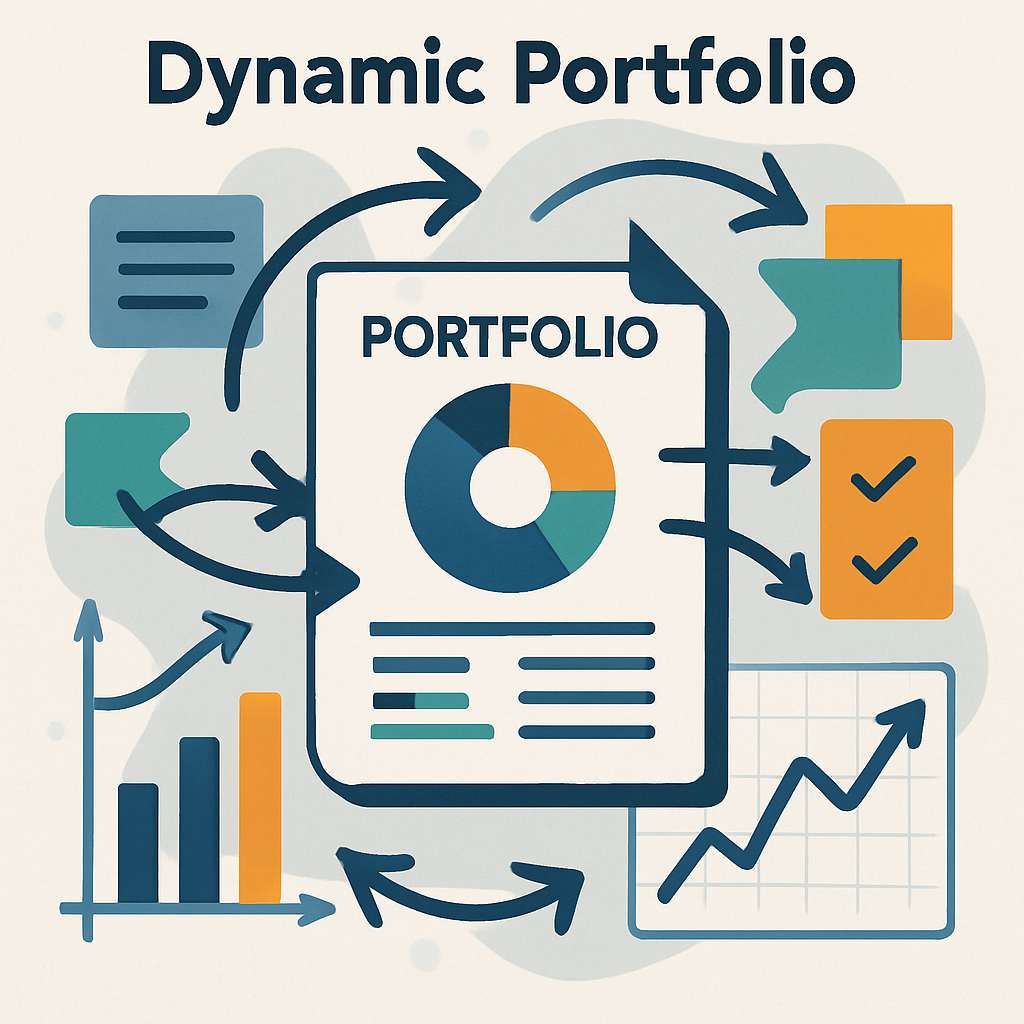
Adaptive Portfolio Management are necessary to optimize the project and product portfolios by continuously monitoring external and internal factors, identifying potential risks, and making timely adjustments. This approach moves away from rigid, long-term plans and embraces a more fluid, iterative process.
This is also affecting the company culture, of continuous adaptation, organizations need to learn how to navigate uncertainties with greater confidence, seize new opportunities, and maintain a competitive edge in an ever-changing market.

4. Enterprise Agility is a Must: Scaling Agile Beyond IT
While Agile methodologies have long been a more present at IT and software development, 2025 I can see agile methods being valued as requirement for organizations across all industries and departments. This fosters a more flexible, adaptive culture throughout the entire organization.
By its purpose, Agile ensures better cross-functional collaboration, faster decision-making, and a quicker response to changing market conditions. By breaking down silos and optimizing resources, companies can work more cohesively toward strategic objectives, leading to improved time to market.
I also feel this is linked to the Trend 3 – in order to fit into a fast-pace transformation in the industry, the company need agile methods to make it happen!

5. AI is Here to Stay: For sure we HAVE to talk about AI !! Artificial Intelligence (AI) is no longer a futuristic concept; it’s a present-day reality that is fundamentally transforming how organizations manage their project portfolios. I am sure you are also using AI in your private life, making a lot of small tasks easier (Goodbye Google search )
Let’s talk about the influence of AI in PPM, enabling PMOs and project managers to process real-time and historical data in mere seconds, spot emerging trends, predict potential risks, and gain invaluable insights that would be impossible to capture manually. AI is becoming an indispensable assistant in project and portfolio management decisions.
I have asked AI on giving some of the key use cases they can support in project and portfolio management :
• Predictive analytics: AI can analyze historical and real-time data to forecast project risks, timelines, and outcomes, enabling proactive decision-making and preventing potential roadblocks.
• Resource optimization: AI helps allocate resources efficiently by identifying the best mix of skills, time, and staff needed for each project, ensuring optimal utilization and avoiding bottlenecks.
• Risk management: AI allows for early identification of potential risks, assessing their impact, and providing tips and best practices for risk mitigation strategies to minimize project disruptions.
• Decision support: AI offers actionable insights and recommendations to support data-driven decision-making in project prioritization and execution.
As AI tools continue to evolve and the integration into PPM platforms is happening in a different pace all around – depending on the company embrace to new technologies and the safety feeling of partners that are the AI tool provider. There is no doubt that AI can make life much easier. In my work I am using a lot to support on market analysis, asking for information on the company market, specifics that I need for my studies.
For the moment, our AI is not integrated into our internal data, so I am counting on AI’s knowledge from external data… But as soon as all cybersecurity and data security answers are made, and safe, I am looking forward to explore more its potential. Are you using AI in your company or work ? Please , share a bit how you are using it, I am curious to learn!!
Hold on… Trends 6-10 will be posted on the next post…
 The Corporate Talk
Leave a comment